
The Adventure Highway: Where the Road Forgets You’re There
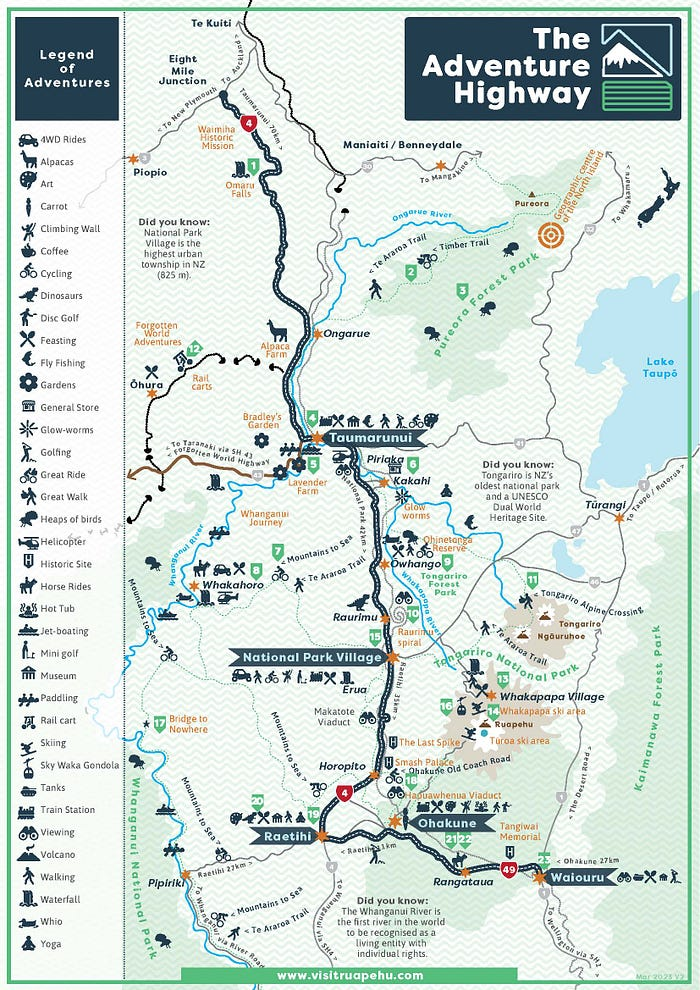
A quiet run through the Ruapehu heartland. Roughly 180 kilometers from National Park village south on SH4, then east on SH49 toward Waiouru. It links Tongariro National Park to the wild western edge of Whanganui National Park. No postcard views forced on you — just deep bush, empty valleys, and the kind of silence that settles in your bones after the first hour.
I’ve driven it in both directions, usually midweek when the only other vehicles are farm utes pulling trailers. Winter can bring frost and the odd snow flurry above 700 meters; summer offers long golden light and empty pull-offs. Either season, the road stays empty. That’s the point.
Start in National Park village. Last reliable fuel, a decent flat white if you’re lucky, maybe a quick pie from the bakery. Head south on SH4. The road drops gently at first, then the bush closes in — podocarps thick, rimu and matai overhead. Occasional glimpses of Ruapehu through the trees, but mostly it’s just green tunnel.
First real marker: Ōwhango. Tiny settlement, river nearby. The Whakapapa River bridge is worth a stop — clear water, trout if you squint. A short walk to the swing bridge if the legs need moving.
Further south, the road flattens into the Retaruke Valley. Farms appear, then disappear. Houses sit far back from the road, smoke from chimneys the only sign of life. You might see a farmer shifting stock across the highway — wave, slow down, no rush.
Raetihi comes next. Small mountain town, honest cafes, a few galleries if art interests you. The main street feels like it hasn’t changed much since the 1950s. Good spot for lunch; the bakery does solid sausage rolls.
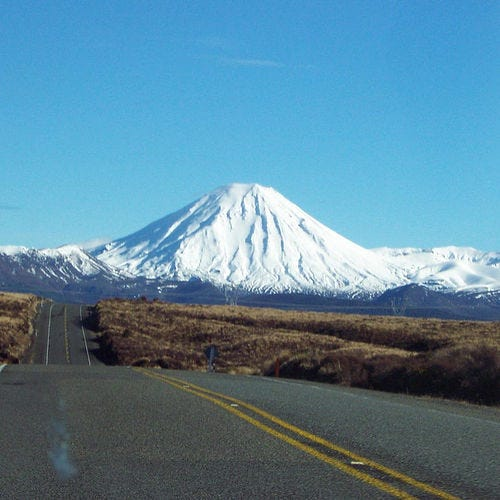
From Raetihi, SH49 swings east toward Waiouru. This stretch opens up — rolling tussock, distant volcanoes, the occasional DOC sign pointing to forgotten tracks. The Desert Road junction appears ahead; turn left for Waiouru if you’re continuing, or right to loop back toward Taupō.
Waiouru itself: army base town, cold, functional. The National Army Museum is here if military history pulls you. Otherwise, fuel up and keep moving — it’s not a place to linger.
Full drive: 3–4 hours without stops. Realistically, stretch it over a day or two. Overnight options are slim — Raetihi motels, a few B&Bs, or freedom camp if you’re set up for it (check current rules; they tighten in Ruapehu).
Practical notes that save hassle.
Fuel in National Park, Raetihi, or Waiouru — nothing reliable in between. Mobile coverage fades for long stretches, especially in the valleys. Offline maps work, but an eSIM like ANZroam picks up signal the moment a tower appears — enough for MetService checks or a quick call if something feels off.
The road doesn’t entertain you. It just lets you be there. Long straights where you can hear your own thoughts, corners that make you ease off the throttle, and the slow realization that this is what much of inland New Zealand still feels like.
Drive steady. The solitude finds you.